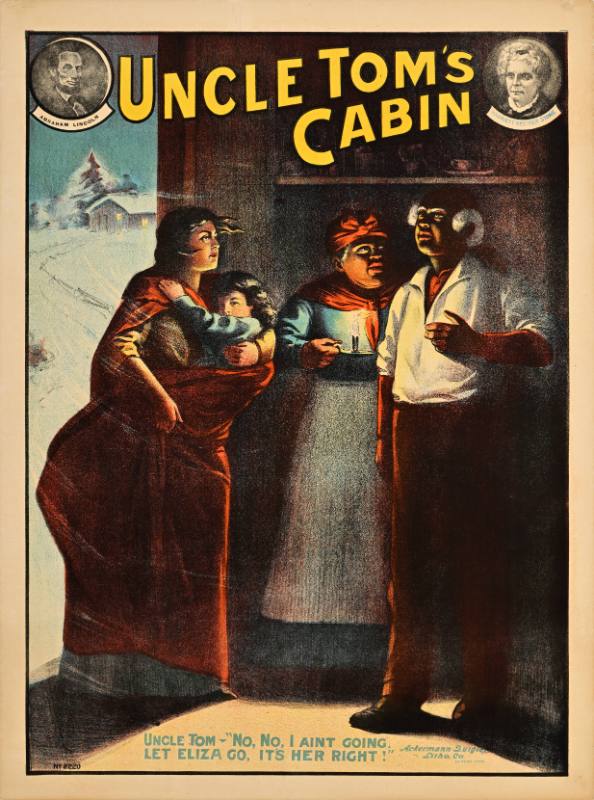
In 1852, Harriet Beecher Stowe published Uncle Tom’s Cabin as an abolitionist novel. It tells the story of Tom, an enslaved man who saves the life of Little Eva, the young white daughter of a Southern enslaver. Little Eva then encourages her father to purchase Tom for the family plantation. Uncle Tom’s Cabin became the best-selling novel of the 19th century and played a role in bringing complex Black characters to the attention of white readers, both those who empathized with and those who objected to its abolitionist messaging. While Stowe did not authorize any theatrical interpretations of Uncle Tom’s Cabin, the loose nature of 19th-century copyright laws allowed the book to be both formally and informally adapted for playhouses and traveling theater troupes, resulting in different versions of the story that became part of a broader American popular culture. Many of these adaptations dismissed the anti-slavery message and reframed the material as a minstrel show. Such racist depictions led to the development of the pejorative term “Uncle Tom,” alluding to a subservient Black man content with his condition of enslavement. Additionally, “Tom Shows” featuring minstrel buffoonery became especially popular after the Civil War.
For inquiries about image licensing, please contact collections@posterhouse.org.