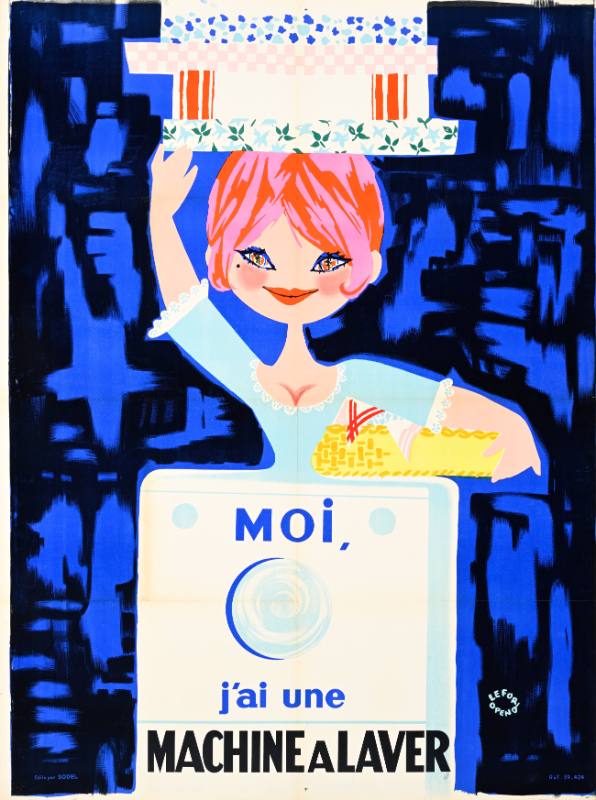
Between 1950 and 1958, appliance production in France increased by more than 400 percent. While far less prevalent in modern homes than electric stoves, water heaters, and refrigerators, domestic washing machines were promoted as essential additions to contemporary life. “White goods” (an industry term for appliances) were almost exclusively advertised in terms of their benefits to women, turning chores into what appeared to be effortless, even glamorous, work. While traditional female labor was not actually changing, the ways in which it was depicted in advertising were: women were now the heroes of the household—sexualized, satisfied, and empowered by technology. Here, Lefor-Openo presents a buxom redhead carrying a pile of perfectly folded sheets and towels on her head as she announces that she has a washing machine. The implication is that the type of modern woman who owns such a device has the time to maintain her girlish sensuality while simultaneously managing an idealized domestic life for her family. Advertisers of the time believed that this type of promotion was “liberating” to women, not objectifying.
For inquiries about image licensing, please contact collections@posterhouse.org.